Home / Turnkey Plants / Water & Solvent Based Paint Plants

Water-Based and Solvent-Based Paint Production Plants

AtomMek designs and builds efficient, scalable paint production plants for water-borne and solvent-borne formulations, from raw material handling to automated filling.

Turnkey Water or Solvent Based Paint Plants

AtomMek specialises in turnkey paint production plants that combine eco-friendly process design with proven industrial technology. Whether your portfolio is built on low-VOC decorative emulsions or on durable solvent-based industrial enamels, we engineer a plant around your formulations, batch sizes and growth plans.

Water-based paints, also known as latex or acrylic paints, use water instead of organic solvents as the carrier. They emit fewer VOCs and are safer for workers and end users. Solvent-based paints rely on organic solvents such as mineral spirits; they are preferred for high-friction and demanding surfaces such as floors, but their flammable vapours call for explosion-protected equipment and controlled solvent handling.

Many producers run both technologies side by side. We design shared utilities and segregated process areas so that each product family gets the right equipment, ventilation and safety concept.

  • Dispersion, grinding and let-down in one integrated line
  • ATEX-oriented layouts for solvent-borne production
  • Scalable from first plant to multi-line facility
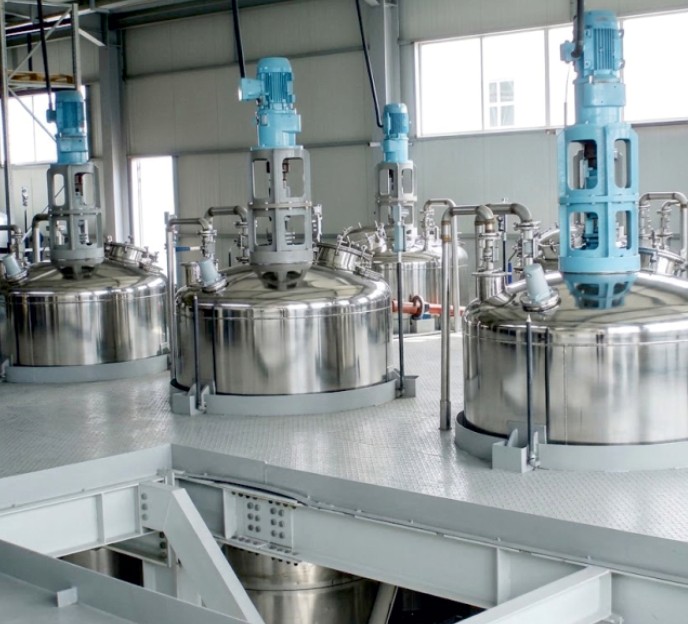
AtomMek water and solvent based paint plant

Core Units of a Paint Production Plant

Each unit is sized to your recipes, batch volumes and target output, and linked by dosing, piping and automation.

Raw Material Handling

Storage and dosing of pigments, extenders, binders, solvents and additives, with weighing for accurate recipes.

High-Speed Dispersion

Dissolvers and high-speed dispersers break down pigment agglomerates into a homogeneous mill base.

Grinding

Grinding to the required particle size for full colour strength, gloss and a smooth film.

Let-Down and Thinning Tanks

Agitated tanks where binder, additives and solvent or water are added to finish the formulation.

Filtration and Quality Control

Filtration before filling, with sampling points for colour, viscosity and durability tests.

Filling and Packaging

Automated filling of cans, pails and drums suitable for both water- and solvent-based paints.

Paint Production Process Step by Step

A typical route from raw materials to packaged paint in an AtomMek plant.

  1. 01

    Raw Material Preparation

    Pigments are mixed with water or solvent and additives to form a uniform slurry. Pigment choice defines colour and performance.

  2. 02

    Binder Addition

    Polymers or resins are dosed to bind the pigment particles and give adhesion to the substrate.

  3. 03

    Mixing and Dispersion

    High-speed dispersers break down agglomerates and wet out pigments for a homogeneous mixture.

  4. 04

    Grinding

    The mill base is ground to the desired particle size for better colour intensity and paint quality.

  5. 05

    Formulation and Let-Down

    Thickeners, surfactants, stabilisers and defoamers are added for consistency and storage stability.

  6. 06

    Testing, Filling and Packaging

    Each batch is checked for colour, viscosity and other specifications, then filled and packed for distribution.

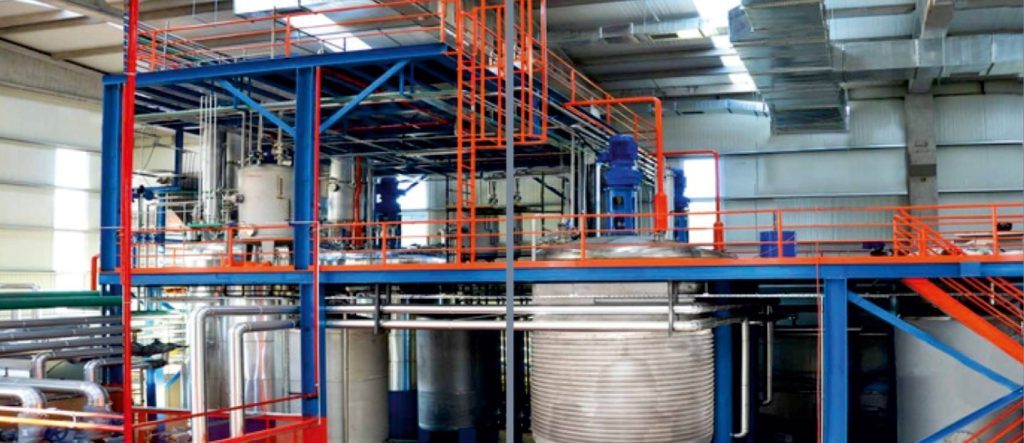
AtomMek turnkey production plant

AtomMek Scope for Paint Production Plants

We deliver comprehensive solutions for every type of paint, from eco-friendly water-based formulations to solvent-based systems for demanding industrial applications. Our scope covers plant design, equipment selection and procurement, manufacturing, installation and commissioning, automation and project management, all under one contract.

For existing plants we offer modular upgrades without a full overhaul: new dispersers, grinders and dosing systems, energy-efficient reactors for binder production, agitators and automated mixers, filling lines and PLC/SCADA integration with laboratory testing equipment. The result is higher efficiency, better product quality, safer operation and a lower environmental impact.

  • Plant design that is flexible and scalable to your production needs
  • Automation for streamlined, repeatable batches
  • Operator training at commissioning

Paints and Coatings You Can Produce

Typical product families for AtomMek paint production plants.

  • Acrylic emulsion paints for walls and exteriors
  • Vinyl paints for cost-effective interior walls
  • PVA paints with good adhesion and a smooth finish
  • Solvent-based enamels for metal and wood
  • Floor and high-friction surface paints
  • Industrial protective coatings
  • Primers and undercoats
  • Wood paints and decorative finishes

Frequently Asked Questions

Short answers to the questions our engineers hear most often.

Water-based paint uses water as the carrier, dries quickly, emits fewer VOCs and stays flexible. Solvent-based paint uses organic solvents, is more durable on demanding surfaces, but its vapours are flammable and require explosion-protected equipment. AtomMek plants can be designed for either technology or both.

Yes. We design segregated process areas with shared utilities, so water-borne and solvent-borne lines run safely in the same facility. Our engineering consultation team defines the layout, zoning and equipment split.

Yes. We supply modular upgrades such as dispersers, grinders, dosing systems, agitators, filling lines and PLC/SCADA automation, integrated into your existing plant without a full overhaul.

Acrylic paints are durable, fast-drying and suitable for walls and exteriors. Vinyl paints are a cost-effective choice for interior walls. PVA paints give good adhesion and a smooth interior finish. For the binder side, see our PVA plants.

Yes. Our installation and commissioning team assembles the plant on site, runs it up with your raw materials and trains your operators before handover.

Plan Your Paint Production Plant

Tell us about your paint types, batch sizes and target output, and our engineers will prepare a tailored proposal for a new plant or an upgrade.