Home / Industrial Reactors / Stainless Steel Reactor

Stainless Steel Reactors in AISI 304L, 316L and 316Ti

When corrosion resistance, product purity and cleanability decide the result, the steel grade and surface finish of the reactor matter as much as its size.

Why Build a Reactor in Stainless Steel?

Stainless steel owes its corrosion resistance to a thin, self-healing chromium oxide layer on its surface. As long as that passive layer is intact, the reactor wall does not react with the product, does not release iron or rust into it and can be cleaned back to a neutral, hygienic surface after every batch.

For many chemical, pharmaceutical, cosmetic and food processes this is the deciding factor. Acidic or chloride-containing media, products with strict colour or metal-content limits, and processes with frequent cleaning all call for a stainless steel reactor rather than carbon steel.

AtomMek selects the grade, wall construction and surface finish together with you, based on the chemistry, temperature, cleaning regime and regulatory requirements of your process, so that the reactor delivers a long service life without overspecifying the material.

  • AISI 304, 304L, 316, 316L and 316Ti
  • Mechanically polished and pickled-passivated surfaces
  • 500 L to 30,000 L, up to 16 bar and 300 °C

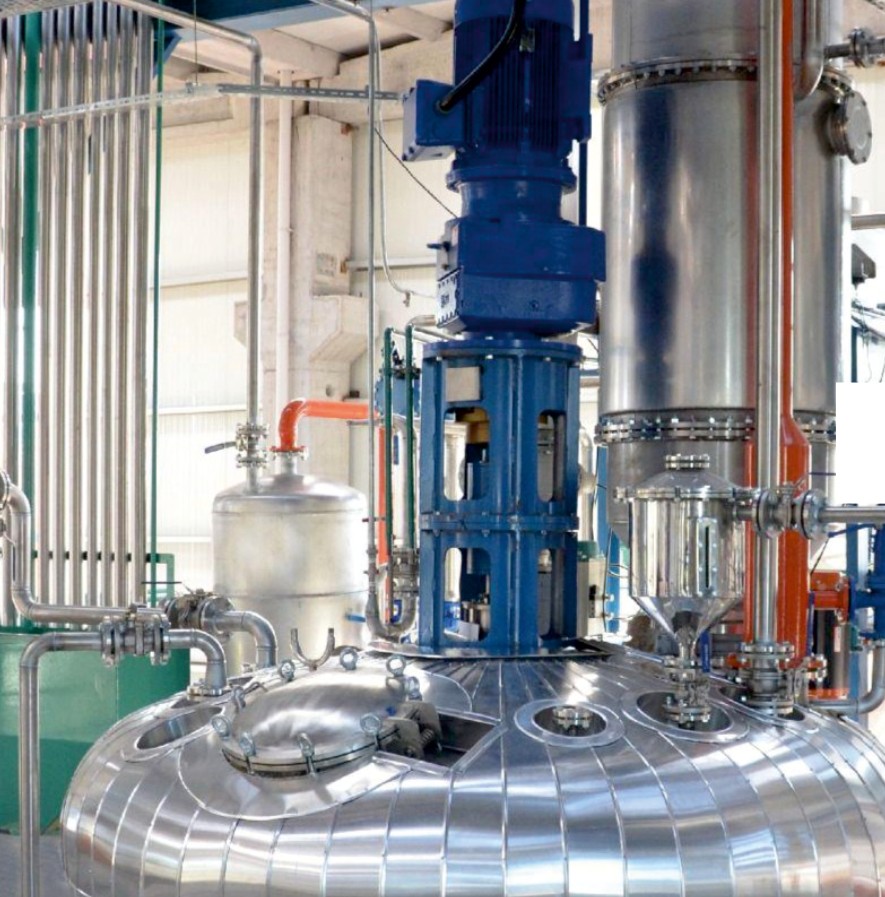
AtomMek stainless steel reactor

Choosing the Right Stainless Steel Grade

Each grade has a role. The right choice depends on the media, temperature and cleaning chemicals in your process.

AISI 304 / 304L

The general-purpose grade for water-based, mildly corrosive and food applications. The low-carbon 304L resists sensitisation at welds.

AISI 316 / 316L

Molybdenum-alloyed for better resistance to chlorides, acids and pitting. 316L is the standard choice for pharma and fine chemicals.

AISI 316Ti

Titanium-stabilised 316 for sustained high-temperature service, where it keeps its resistance to intergranular corrosion.

Mixed Construction

Stainless steel wetted parts with a carbon steel jacket or support structure to balance cost and corrosion resistance.

From Plate to Polished Reactor

  1. 01

    Material Certification

    Plates, heads and nozzles are supplied with mill certificates so every wetted part is traceable to its heat number.

  2. 02

    Forming and Welding

    Shells and dished heads are formed and welded under EN ISO 3834-2 quality requirements, with weld seams ground flush on the product side.

  3. 03

    Surface Finishing

    Internal surfaces are mechanically polished to the specified roughness, with smooth radiused corners and no dead zones.

  4. 04

    Pickling and Passivation

    Chemical pickling removes heat tint and contamination and restores the passive chromium oxide layer.

  5. 05

    Testing and Documentation

    Pressure testing, dimensional checks and surface inspection are recorded in the reactor documentation package.

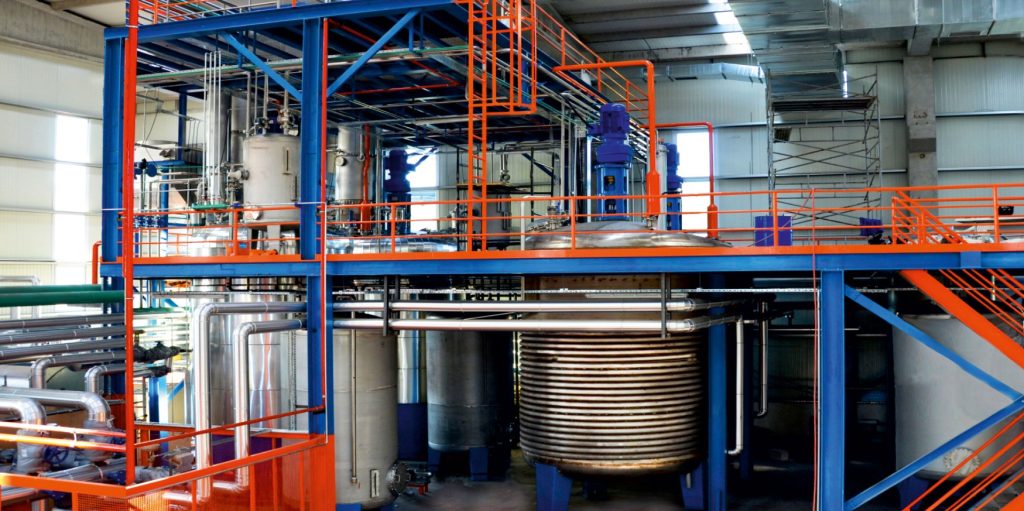
AtomMek alkyd resin plant

Surface Finish, Hygiene and Cleanability

A smooth surface is harder for product to stick to and easier to clean. For hygienic, pharmaceutical and cosmetic applications we polish internal surfaces to low roughness values, design nozzles and bottom outlet valves without crevices, and add spray balls for clean-in-place systems. For technical chemicals, a standard pickled finish is often sufficient and more economical.

Our reactors are manufactured in Kartepe, Kocaeli by a team with more than 30 years of experience in stainless steel process equipment. Each vessel is integrated with its agitator, heating and cooling system and PLC panel before delivery and commissioned on site with operator training.

Typical Applications

  • Pharmaceutical APIs and intermediates
  • Cosmetics, creams and personal care
  • Food ingredients, flavours and syrups
  • Acidic and chloride-containing media
  • Water-based resins and emulsions
  • Fine and specialty chemicals
  • Detergents and surfactants
  • Biotechnology and fermentation

Technical Specifications

Configured per project; the values below describe our standard design envelope.

Feature Details
Wetted Materials AISI 304, 304L, 316, 316L, 316Ti
Jacket / Structure Stainless steel or carbon steel
Internal Finish Mechanically polished, pickled and passivated; electropolishing on request
Capacity 500 L to 30,000 L
Operating Limits Up to 16 bar and 300 °C
Heating / Cooling Conventional jacket or half-pipe coil
Cleaning Spray balls and CIP connections on request
Compliance CE, PED, ASME, AD 2000, GMP, ATEX as required

Frequently Asked Questions

Short answers to the questions our engineers hear most often.

316L has a lower carbon content, which reduces carbide precipitation at welds and keeps corrosion resistance in the heat-affected zone. It is the preferred grade for welded reactors in pharma and fine chemicals.

316Ti is stabilised with titanium and keeps its resistance to intergranular corrosion during prolonged high-temperature operation. Our engineering team recommends it where process temperatures stay high for long periods.

For hygienic, pharmaceutical and cosmetic products, yes. For many technical chemicals a pickled and passivated finish is sufficient and more cost-effective.

No. For non-corrosive media such as alkyd resins, oils and bitumen, a carbon steel reactor is often the more economical choice.

Batch, continuous, pilot and high-pressure designs. See our batch reactors and industrial chemical reactors.

Specify the Right Stainless Steel Reactor

Tell us about your media, temperatures and cleaning requirements, and we will recommend the grade, finish and reactor design for your process.