





Home / Turnkey Plants / Alkyd Resin Plants
Turnkey Alkyd Resin Plants for Paints, Varnishes and Coatings
Complete alkyd resin production plants, from concept and engineering to installation, commissioning and operational support.

Home / Turnkey Plants / Alkyd Resin Plants
Complete alkyd resin production plants, from concept and engineering to installation, commissioning and operational support.
AtomMek designs and manufactures turnkey alkyd resin production plants. Our plants produce high-quality resins for paints, coatings, adhesives, varnishes and other industrial applications.
By controlling reaction conditions such as temperature, pressure and reaction time, our plants deliver consistent resin properties, high performance and superior quality. Accurate dosing of polyols, acids and oils, a well-designed reflux and water separation system, and a correctly sized thinning tank are the foundations of a reliable alkyd line.
Our R&D and production teams focus on innovation, quality control and optimised production efficiency, and we ensure secure packaging and shipping of equipment to your site.
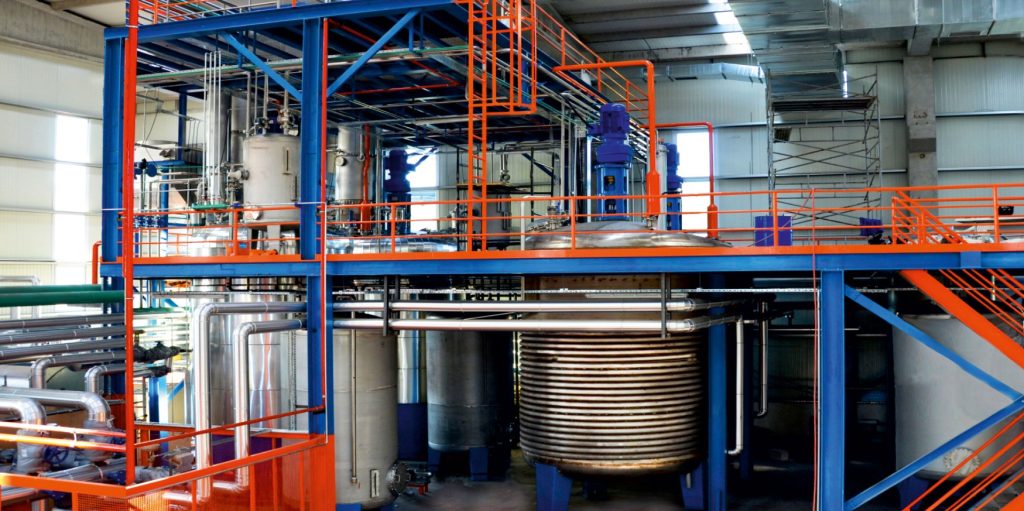
We build plants for the full range of alkyd resin types.
Alkyd resin is produced by esterifying polyhydric alcohols and dibasic acids, modified with oils and fatty acids, at 200–240 °C.
Polyols, dibasic acids or anhydrides and oils or fatty acids are dosed into the reactor.
The batch is heated to 200–240 °C with heat transfer oil while the agitator keeps the mixture homogeneous.
In the solvent process, reaction water is removed as an azeotrope with the solvent; in the fusion process it is removed with inert gas and vacuum.
The reaction continues until the target acidity and viscosity are reached.
The resin is diluted in the thinning tank, filtered and transferred to storage or filling.
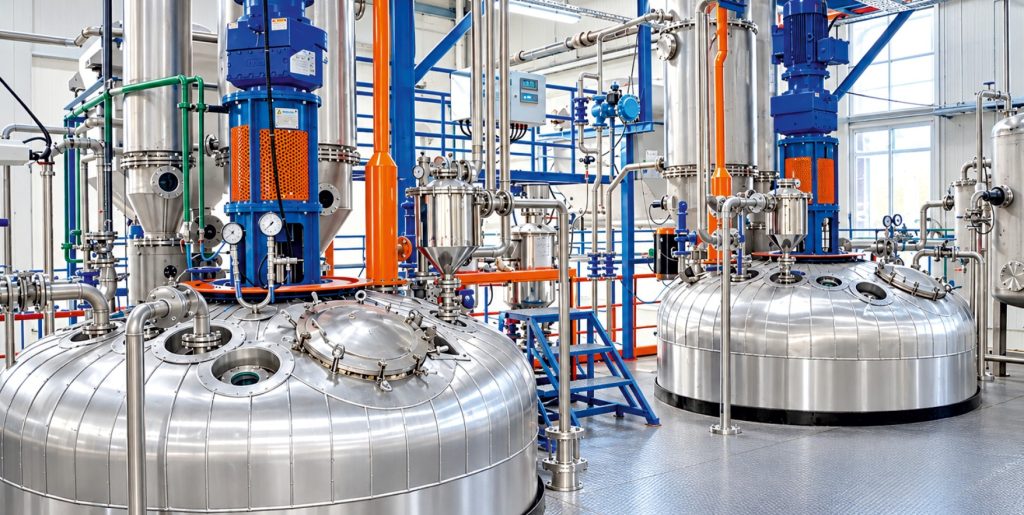
AtomMek provides end-to-end services for alkyd resin plants, including design, construction, commissioning and operational support. Our engineers and technicians make sure each plant fully complies with safety and environmental standards.
Custom-designed alkyd plants combine high-efficiency production, optimised process control, safety and environmental compliance, and on-time delivery within budget. Pressure equipment is designed to ASME, EN 13445 or AD 2000, and ATEX requirements are applied to solvent handling areas where needed.
Alkyd resin is a key building block of paint and varnish systems, determining adhesion, durability and resistance.
Key process conditions our plants are designed around.
| Parameter | Design Basis |
|---|---|
| Reaction | Esterification and polycondensation of polyhydric alcohols and dibasic acids, modified with oils or fatty acids |
| Reaction temperature | 200–240 °C |
| Solvent process | Reaction water removed as an azeotropic mixture with the solvent |
| Fusion process | Reaction water removed with inert gas and vacuum, especially for long-oil alkyds |
| Batch end point | Target acidity and viscosity |
Short answers to the questions our engineers hear most often.
Alkyd is a polyester synthetic resin created by the polycondensation of polyhydric alcohols and dibasic acids, modified with oil or fatty acids. The name comes from alcohol and anhydride. The polyester part gives hardness, while the oils improve flexibility, adhesion, pigment wetting and solvent solubility.
In the solvent process, reaction water is removed azeotropically with a solvent. In the fusion process, no solvent is used and water is removed with inert gas and vacuum, a method used especially for long-oil alkyds.
Early polyester research dates back to Berzelius in 1847, who reacted tartaric acid with glycerin. After World War II alkyd research accelerated and the resins became widely used in paint and varnish manufacturing.
Yes. We design multi-purpose plants that produce several alkyd types. Discuss your product range with our engineering team.
Yes. See our Polyester Resin Plants page for composite and coating resin lines.
Share your alkyd types and production targets, and our engineers will prepare a tailored plant concept and quotation.